An independent guide to Liverpool’s mercantile heritage

info@livworldheritage.index-html.com

Ornate stone commercial architecture in a historic British city

Area 04 · Commercial District

Castle Street and the architecture of trade.

Georgian civic order, Victorian invention and interwar monumentality meet in Liverpool’s historic commercial core.

The district at a glance

A civic and commercial centre built to impress.

Castle Street, Dale Street and Old Hall Street form the historic focus of Liverpool’s commercial and civic centre. Their architecture occupies a street pattern with medieval origins and records successive periods of growth.

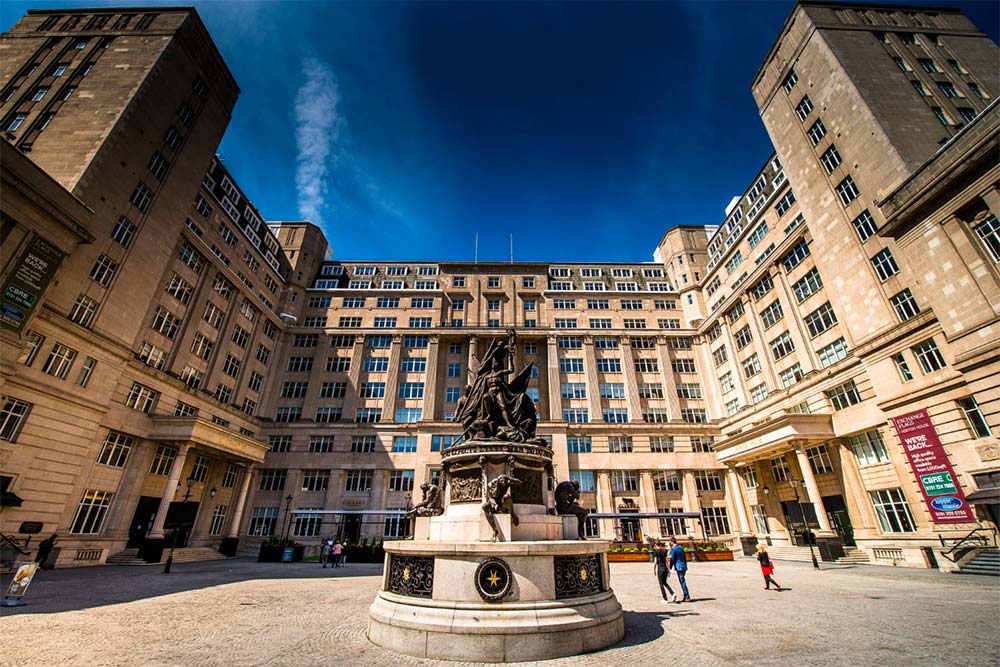
Buildings from the eighteenth, nineteenth and twentieth centuries reveal changing approaches to banking, shipping, offices and municipal government. Ambitious façades, sculpture and rich materials made commercial confidence visible in the street.

  • Town Hall
  • Martins Bank
  • India Building
  • Oriel Chambers and 16 Cook Street

“Leverpoole… It’s a very rich trading town… ye streetes are faire and long, its London in miniature.”

Celia Fiennes, 1698

Buildings to read

Four architectural landmarks

Together these structures show how civic identity, finance, shipping and construction technology shaped the district.

01 · 1749–1754

Liverpool Town Hall

This Grade I listed Georgian building developed through several phases. John Wood of Bath prepared the original design; later alterations followed, and reconstruction after the 1795 fire continued into the early nineteenth century.

02 · 1932

Martins Bank

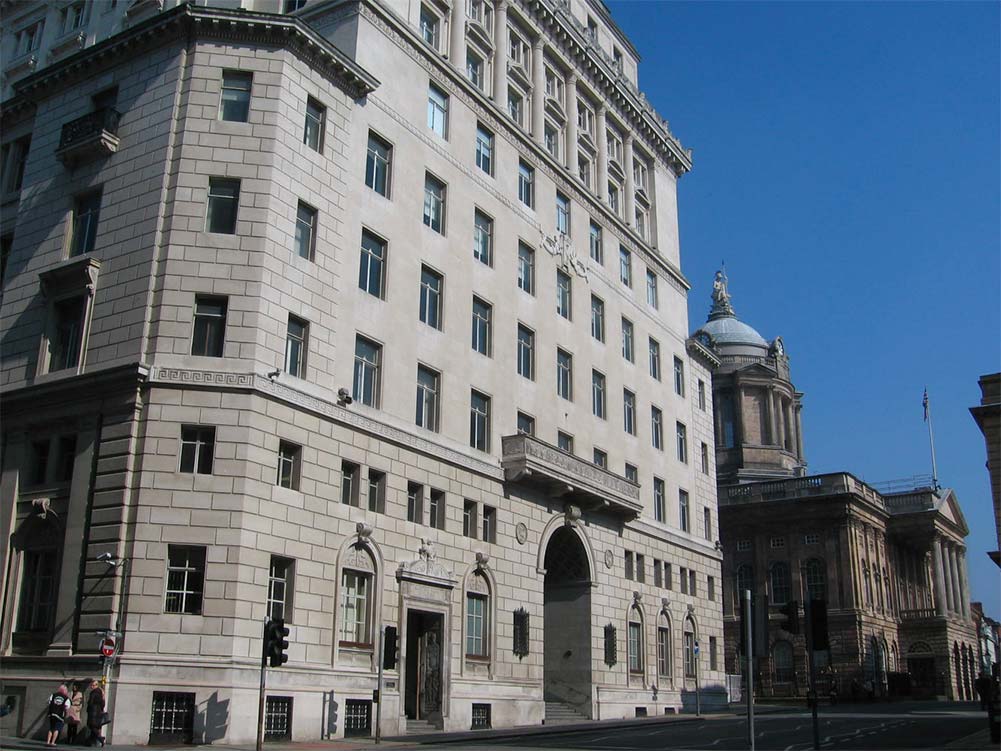
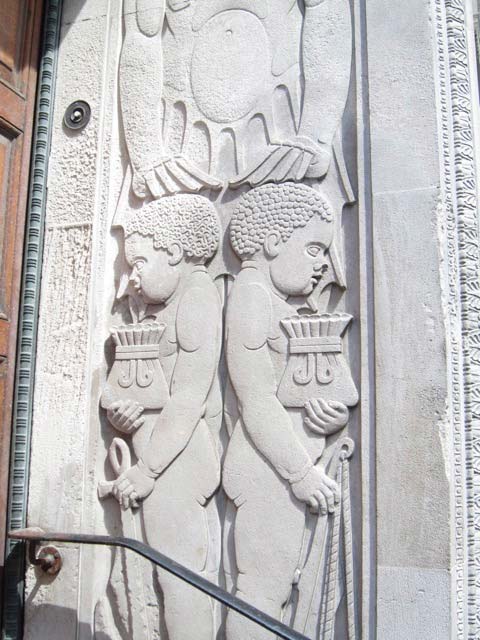
Designed by Herbert Rowse, the Grade II* listed former head office is a major interwar classical building. Its entrance reliefs require careful reading: imagery connecting Liverpool, Africa, wealth and trade reflects the city’s economy and its association with the transatlantic slave trade.

03 · 1924–1931

India Building

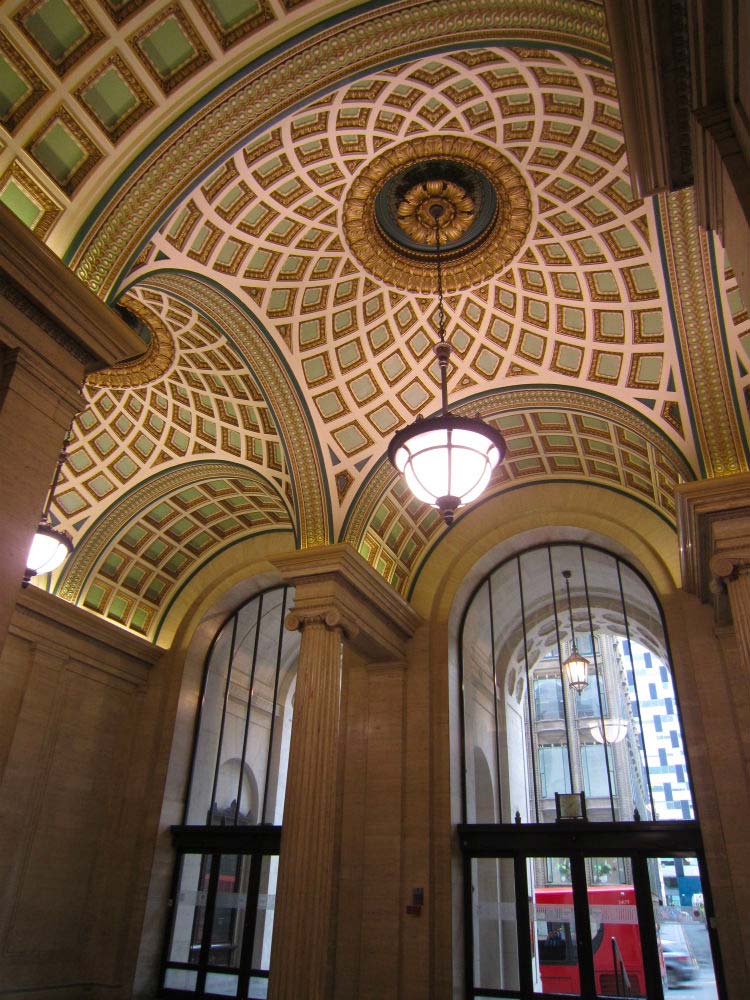
Built for the Blue Funnel Line, this immense Grade II* listed office block was designed by Herbert J. Rowse with Briggs, Wolstenholme and Thorneley. Its stripped classical façades concentrate Italian Renaissance detail at the upper and lower storeys.

04 · 1864 and 1866

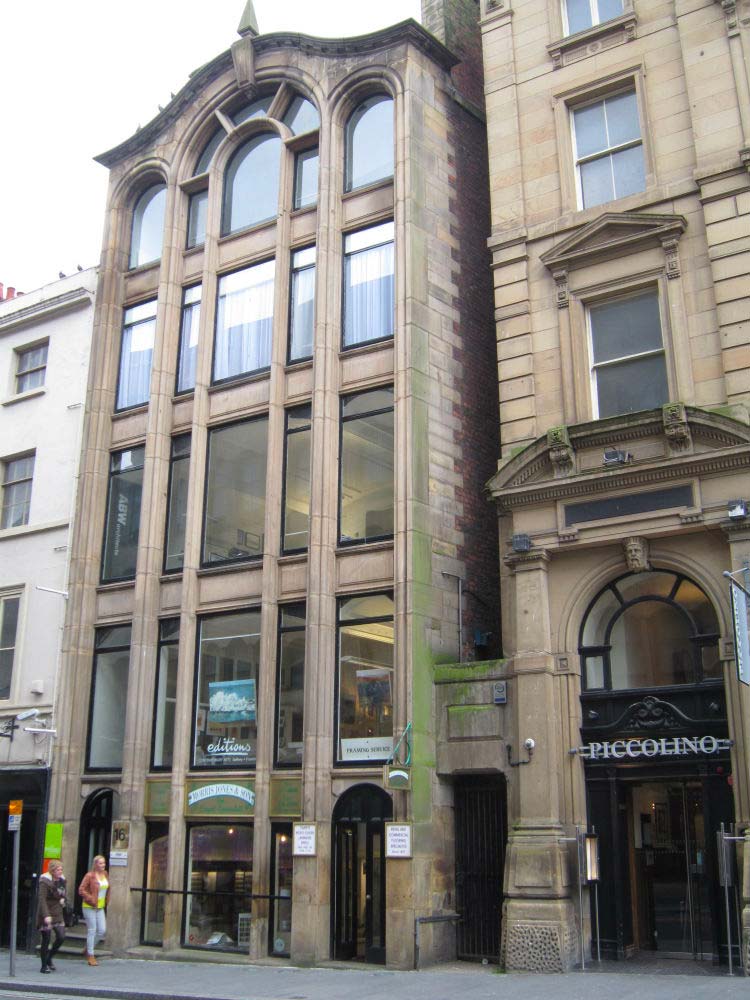
Oriel Chambers and 16 Cook Street

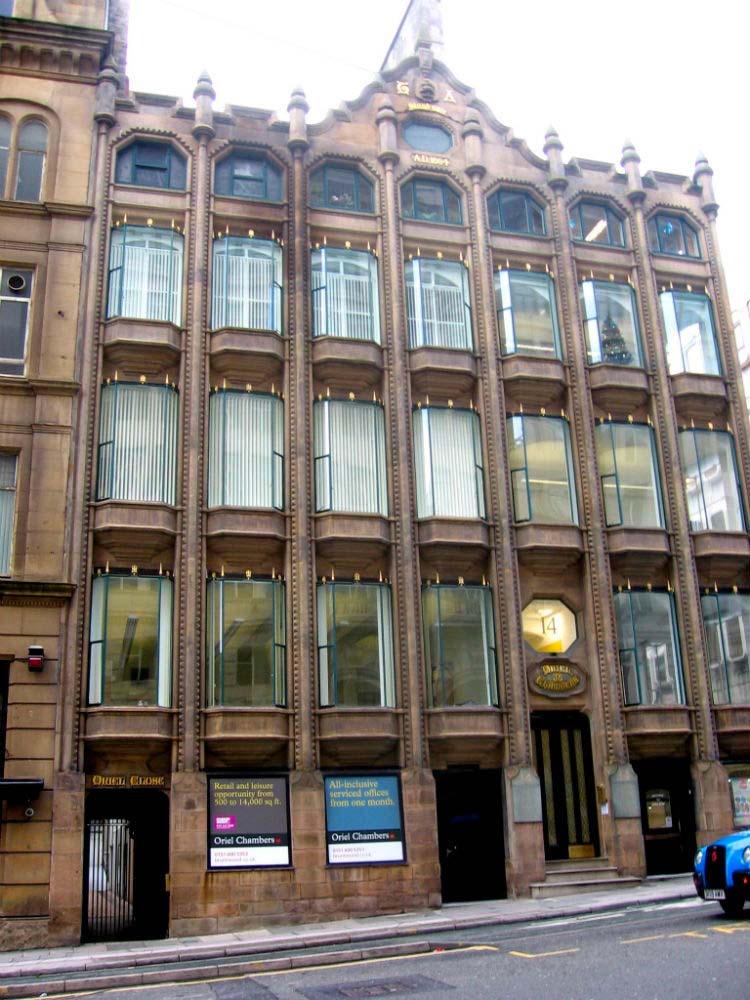
Peter Ellis used extensive metal-framed glazing in both buildings. Their light façades were technically adventurous, and Oriel Chambers is frequently discussed in relation to the later development of commercial architecture in Chicago.

Listed status reflects architectural or historic interest, but it does not make the district static. Adaptation, maintenance and new development all influence how this commercial landscape is experienced.

Carved stone ornament on a historic commercial building

How to explore

Read the street in layers.

A close look at materials, windows, sculpture and the relationship between buildings reveals how commerce was represented across different periods.

Begin with the street plan

Notice how monumental buildings occupy routes whose origins predate much of the visible architecture.

Compare façades

Set Georgian proportion beside Victorian detail and twentieth-century classicism.

Examine the imagery

Read carved figures and symbols critically, including their connections to colonial trade and enslavement.

Look for innovation

At Oriel Chambers and Cook Street, consider how iron and glass changed the commercial office façade.

Continue exploring

District context

Use these source-listed resources for further information about the Town Hall and Liverpool’s history of slavery and trade.

What’s included

This guide covers

The district’s historic street pattern, four key buildings, architectural innovation, commercial symbolism and the need to interpret links between wealth, colonial trade and enslavement.

Practical context

Questions, answered.

Why is Castle Street important?

It forms part of Liverpool’s historic civic and commercial core, where buildings from several periods reveal the city’s development as a major trading centre.

Which architectural periods are represented?

The district includes Georgian, Victorian and twentieth-century architecture, with styles ranging from restrained classicism to richly decorated commercial design.

What makes Oriel Chambers significant?

Its extensive metal-framed glazing was highly innovative in the 1860s and is often considered in accounts of the development of modern commercial façades.

How should the Martins Bank reliefs be understood?

They should be viewed critically in the context of Liverpool’s trading economy, colonial imagery and the city’s connections with the transatlantic slave trade.

Are these buildings protected?

The highlighted landmarks have listed status at Grade I or Grade II*. Current records and consent requirements should always be checked with the relevant official authorities.

Is the district still in commercial use?

It remains a living central district. Uses and access can change, so check current information before planning an interior visit.

See how the districts connect.

Continue from Castle Street to the docks, civic institutions and merchant streets that complete Liverpool’s maritime landscape.

Explore all character areas